Industrial real estate has changed more in the last five years than it did in the previous twenty.
Same-day shipping. Electrified fleets. Automation. What used to be “good enough” warehouse space no longer works.
More than 20% of consumers say they’ll abandon a purchase if delivery takes too long.* Meanwhile, transportation can account for between 45-70% of total supply chain costs, while real estate accounts for just 3-6%.**
That shift has real estate implications. Companies want locations closer to customers—and that means industrial assets in markets with limited land, aging stock, and tight entitlements.
That’s where we invest.
We focus on small-to-mid-sized logistics assets that typically require $5 to $25 million in equity, acquired one by one in high-barrier markets. We’ve completed over $2 billion in total transactions and sourced the majority of our investments through our direct and off-market relationships.
*Source: Statista, Main reasons why consumers abandon their orders during the checkout process in the United States in 2025
**Source: CBRE, 2025 Logistics Occupier Survey
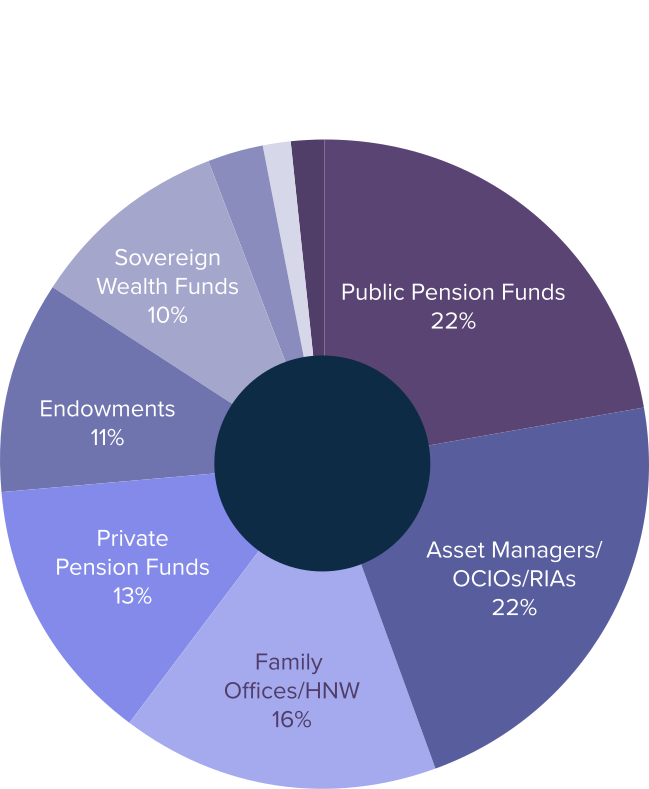
NorthBridge is backed by a growing group of institutional partners, including public and private pension funds, foundations, endowments, corporations, asset managers, RIAs and family offices.
These investors are drawn to our focus: industrial real estate assets in high-demand markets, frequently sourced off-market, managed hands-on, and held with purpose. Many have supported multiple fund cycles because they’ve seen how we approach each deal, how we handle complexity, and how we stay accountable from start to finish.
In 2021, NorthBridge raised $505 million for NB Partners Fund III, well in excess of its target. In 2024, the firm closed NB Partners Fund IV, outperforming our $800 million target with $948 million in total commitments. Across strategies, we’ve now completed over $2 billion in total transactions.
We stay close to the work, sourcing, underwriting, improving, and operating each asset in-house. That’s what keeps our platform efficient, adaptable, and aligned with both tenant needs and investor outcomes.